
Halima Cassell
….
Artist
..
Artist
….
….
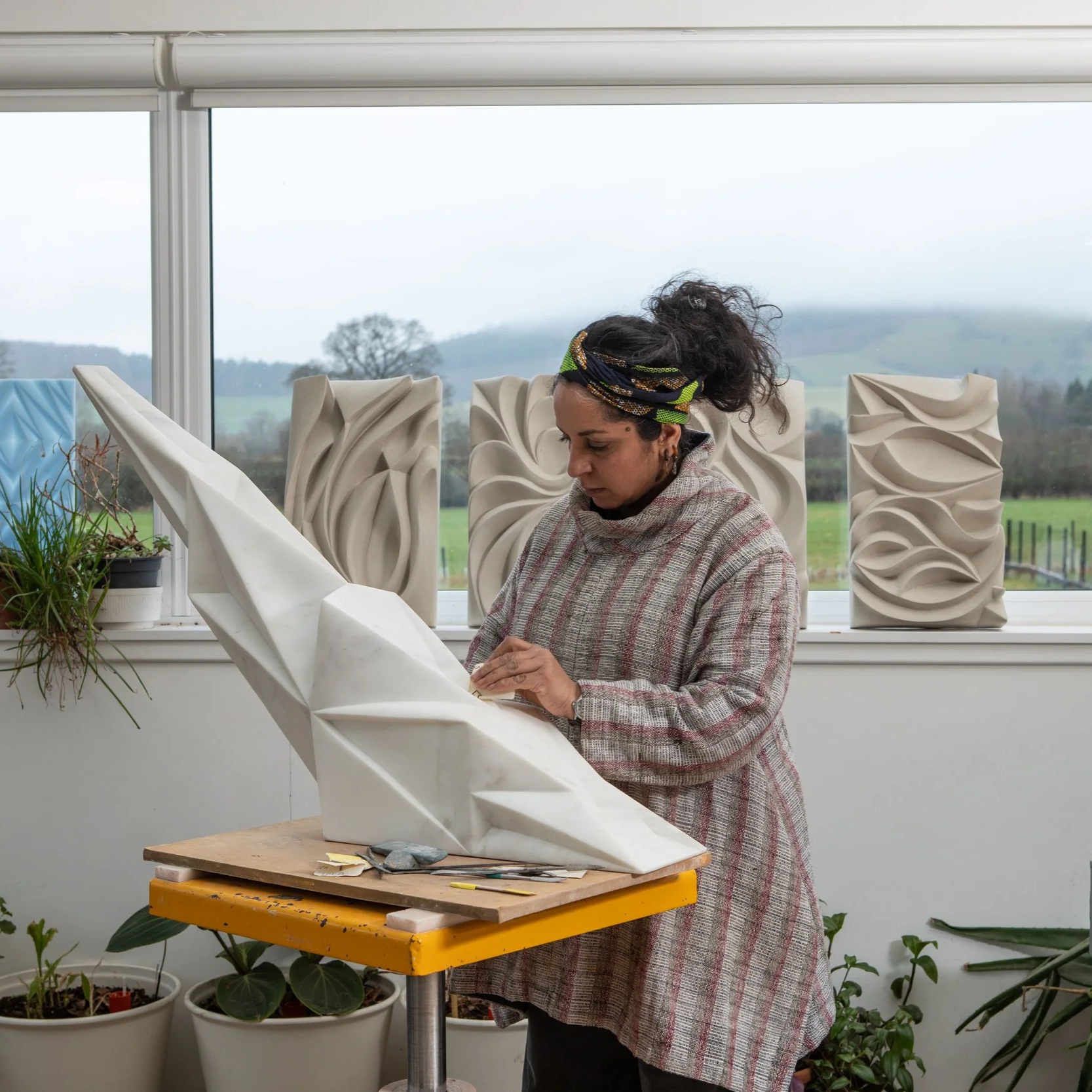
Halima confounds the traditional categories of art and craft. She is primarily a maker who works habitually in clay but she is less a potter than a sculptor, she is, essentially, an artist.
Halima’s enthusiasm for coming to terms with new disciplines, working in wood, glass, marble or bronze, brick, porcelain or concrete, is not just indicative of her willingness to experiment and to accept the challenge of a new medium, but also of her determination to increase the range of possibilities encompassed by her art.
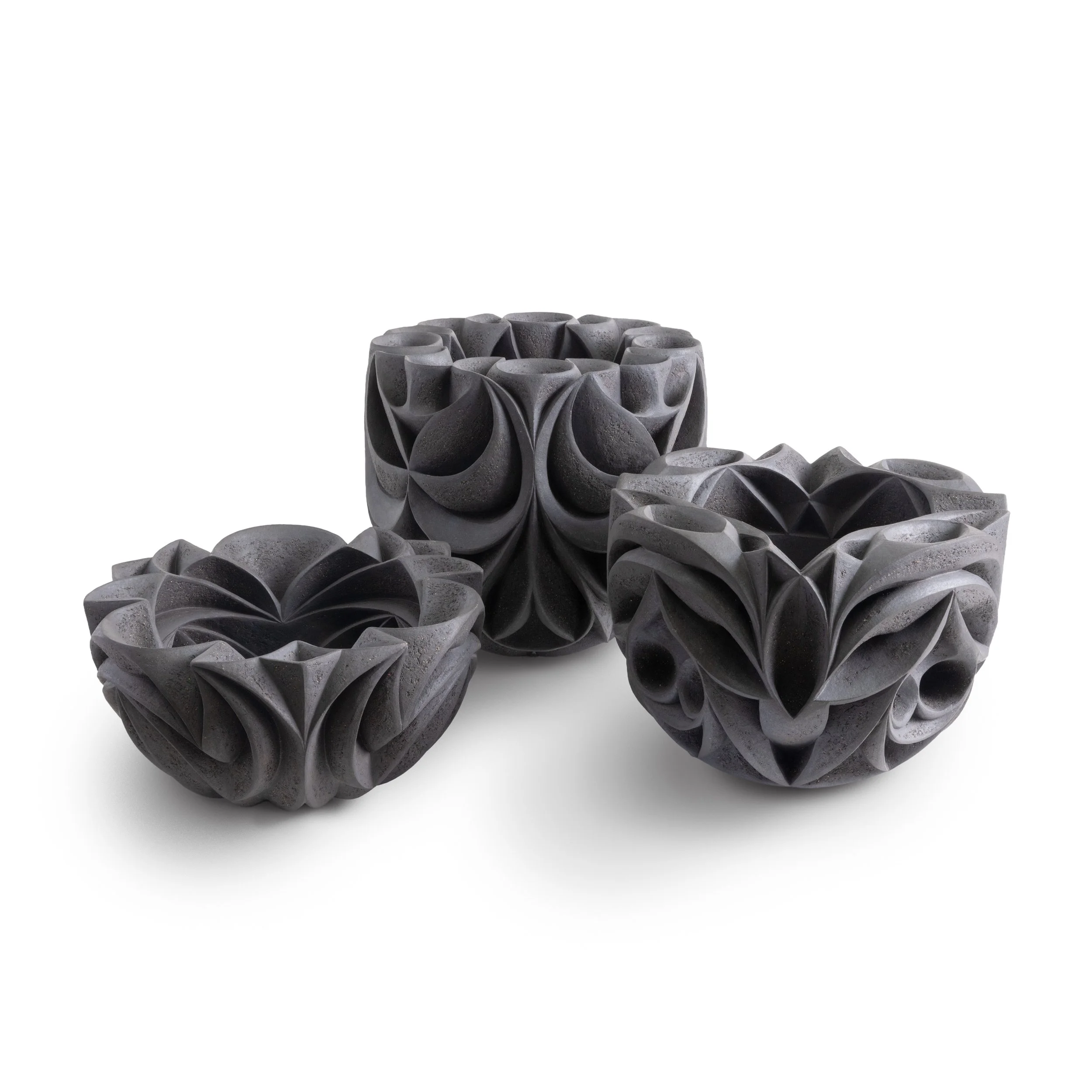
But her signature material is still clay, which she moulds and carves with natural authority and no little dexterity. Her crisply cut and satisfying forms live on in the mind, for clay is her mother tongue. Not often referring to the human clay, though her designs can reference the body without describing it, her sculptures are usually more to do with abstract patterns which command a layered afterlife of meaning. The title of my 2008 essay on Halima’s work, ‘The Universal Language of Pattern’, was intended to emphasise its cross-cultural appeal and the fact that it can be read in many ways and appreciated by people from very different backgrounds and cultures. Thus, among Halimas sources are not just the riches of Western art, but the repeat patterns of African textiles, Native American artefacts and Australian Aboriginal paintings. She also revels in the history and actuality of Islamic ornament but brings her own very contemporary interpretation to this inheritance.
Halima’s mathematically complex vessels – some like upturned vaults – clearly enjoy an intimate relationship with architecture and geometry and are built with an eye for the dramatic play of light across the forms. She is adept at manipulating colour, line and texture with a playfulness that can sometimes mask her real attitude.
..
Mae Halima yn drysu'r categorïau traddodiadol o gelf a chrefft. Gwneuthurwr yw hi'n bennaf sy'n gweithio fel arfer mewn clai ond mae hi'n llai o grochenydd na cherflunydd, ac mae hi, yn y bôn, yn artist.
Mae brwdfrydedd Halima dros ddod i delerau â disgyblaethau newydd, gan weithio mewn pren, gwydr, marmor neu efydd, brics, porslen neu goncrit, nid yn unig yn arwydd o’i pharodrwydd i arbrofi ac i dderbyn her cyfrwng newydd, ond hefyd ei phenderfyniad i gynyddu’r ystod o bosibiliadau a gwmpasir gan ei chelfyddyd.
Ond clai yw ei phrif ddeunydd o hyd, y mae'n ei fowldio a'i gerfio ag awdurdod naturiol a heb fawr o ddeheurwydd. Mae ei ffurfiau crisp a bodlon yn parhau yn y meddwl, oherwydd clai yw ei mamiaith. Heb gyfeirio'n aml at y clai dynol, er y gall ei chynlluniau gyfeirio at y corff heb ei ddisgrifio, mae ei cherfluniau fel arfer yn ymwneud yn fwy â phatrymau haniaethol sy'n mynnu ôl-fywyd haenog o ystyr. Bwriad teitl fy nhraethawd yn 2008 ar waith Halima, ‘The Universal Language of Pattern’, oedd pwysleisio ei apêl drawsddiwylliannol a’r ffaith y gellir ei ddarllen mewn sawl ffordd a’i werthfawrogi gan bobl o gefndiroedd a diwylliannau gwahanol iawn. Felly, ymhlith ffynonellau Halimas nid yn unig cyfoeth celf y Gorllewin, ond patrymau ailadrodd tecstilau Affricanaidd, arteffactau Brodorol America a phaentiadau Aboriginaidd Awstralia. Mae hi hefyd yn ymhyfrydu yn hanes a gwirionedd addurniadau Islamaidd ond yn dod â'i dehongliad cyfoes iawn ei hun i'r etifeddiaeth hon.
Mae’n amlwg bod gan lestri mathemategol gymhleth Halima – rhai fel claddgelloedd ar i fyny – berthynas agos â phensaernïaeth a geometreg ac fe’u hadeiladir gyda llygad am chwarae dramatig golau ar draws y ffurfiau. Mae hi'n fedrus wrth drin lliw, llinell a gwead gyda chwareusrwydd a all weithiau guddio ei hagwedd go iawn.
….
….
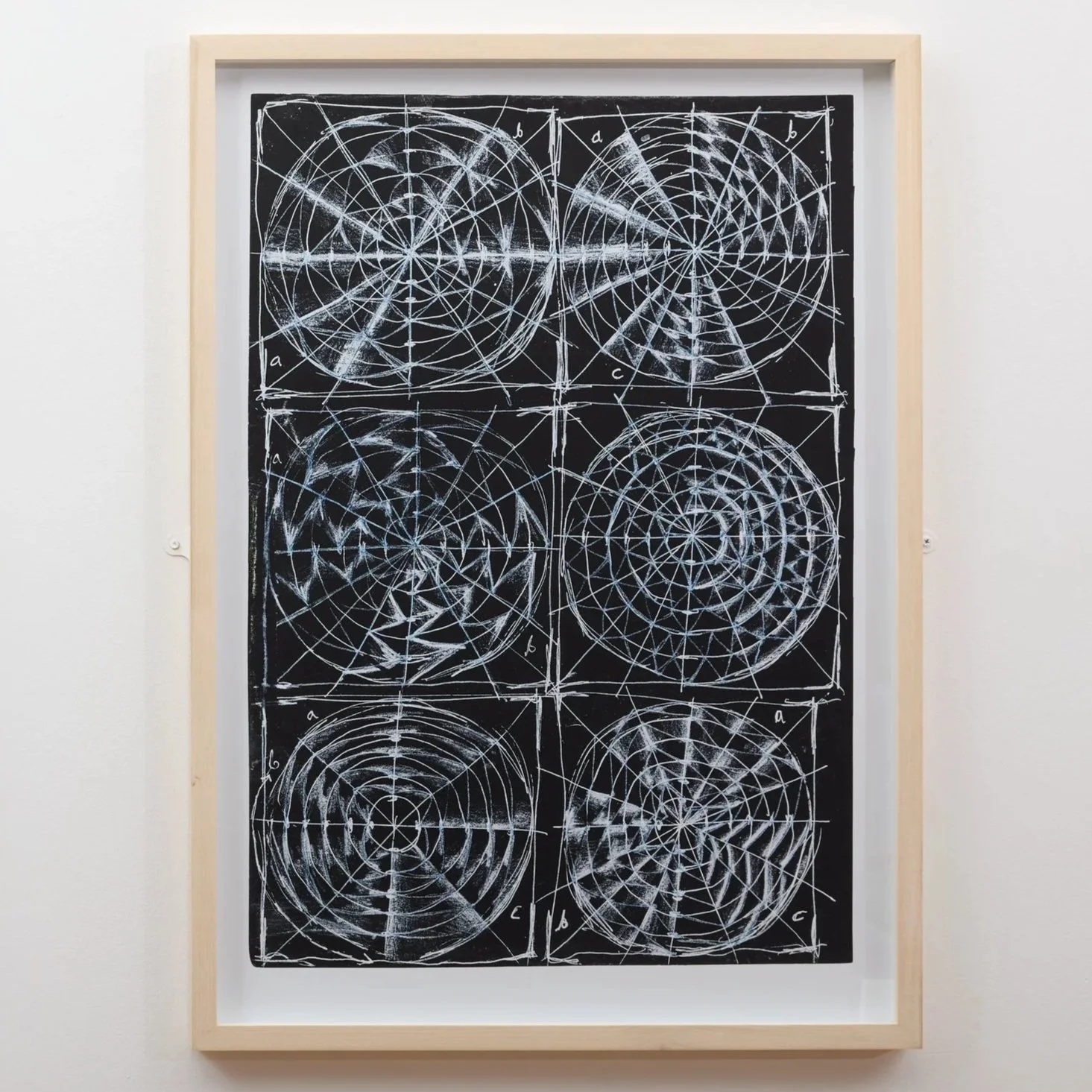
A1 limited‑edition print, one of just 25 in the series. Sold unframed.
..
Argraffiad cyfyngedig A1, un o 25 yn unig. Heb ei fframio.
….
….
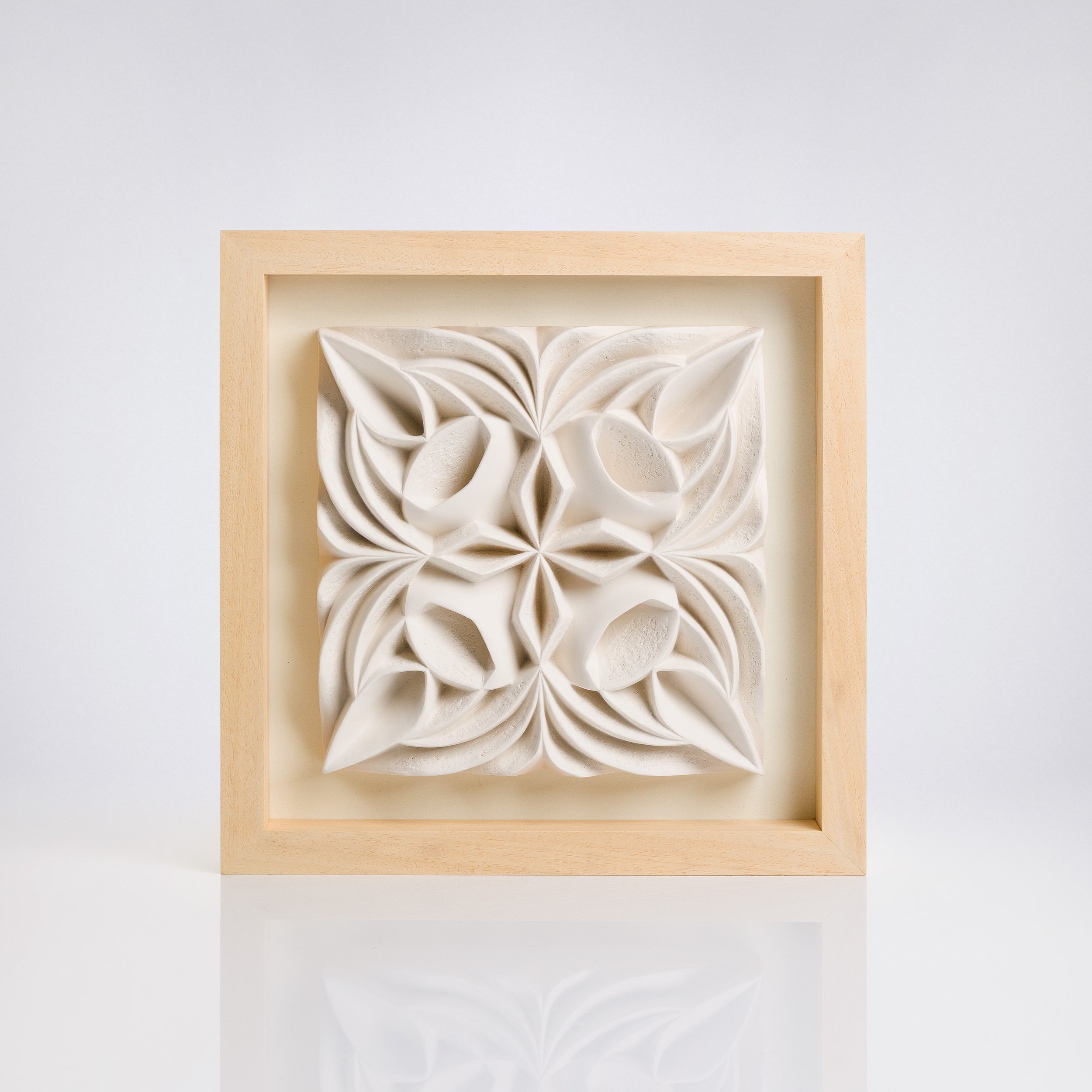
Jesmonite, with bespoke colour mix, each piece is hand cast, hand finished and hand polished.
30.5 × 30.5 x 4cm
..
Jesmonit, gyda chymysgedd lliw pwrpasol, mae pob darn wedi'i gastio â llaw, ei orffen â llaw a'i sgleinio â llaw.
30.5 × 30.5 x 4cm
….
….
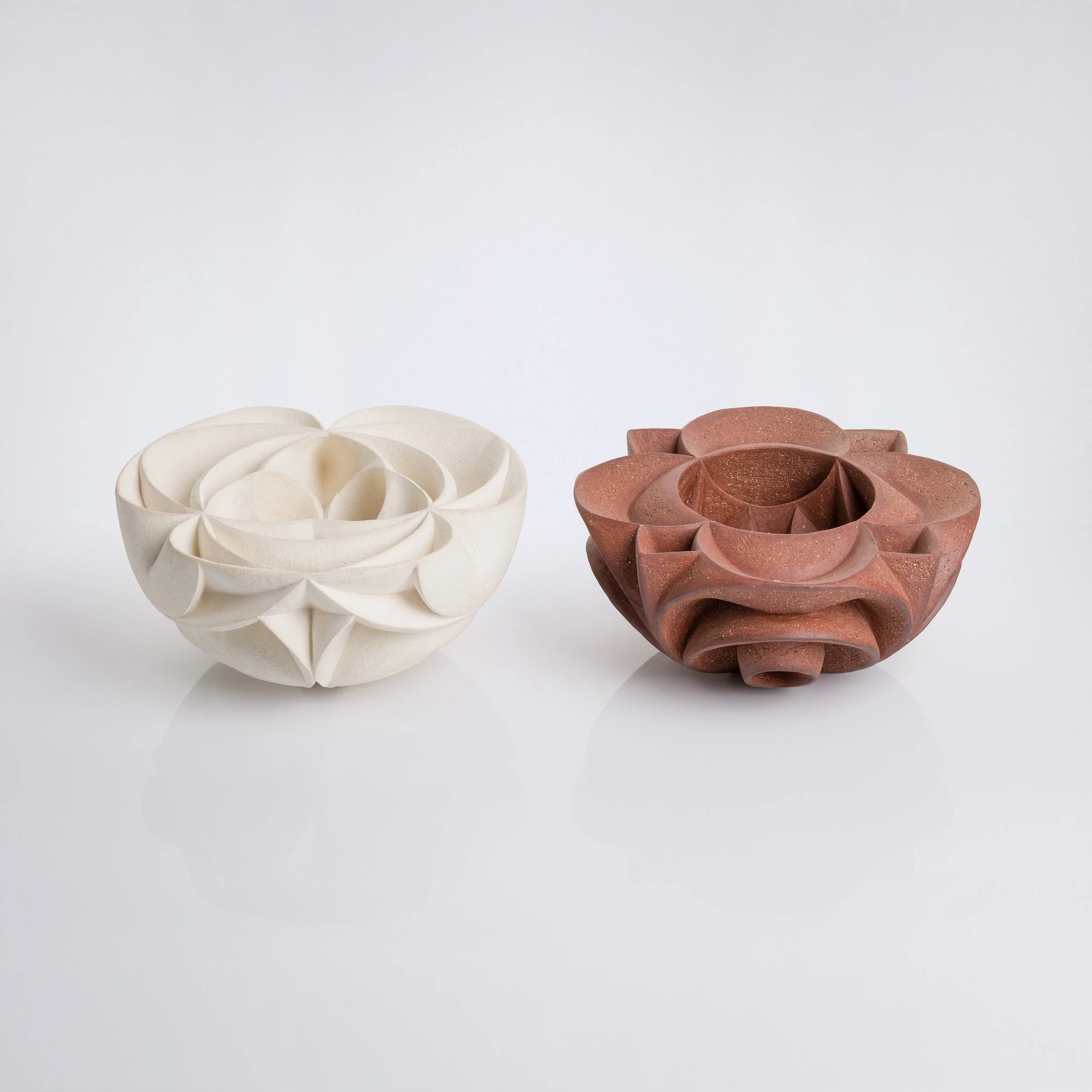
Hand carved, unglazed stoneware clay.
4.5” x 9"
Currently in exhibition, available for collection after the 20th September 2026.
..
Clai crochenwaith caled heb ei wydro wedi’i gerfio â llaw.
4.5” x 9"
Arddangosir ar hyn o bryd; ar gael i'w casglu ar ôl yr 20fed o Fedi 2026.
….
….
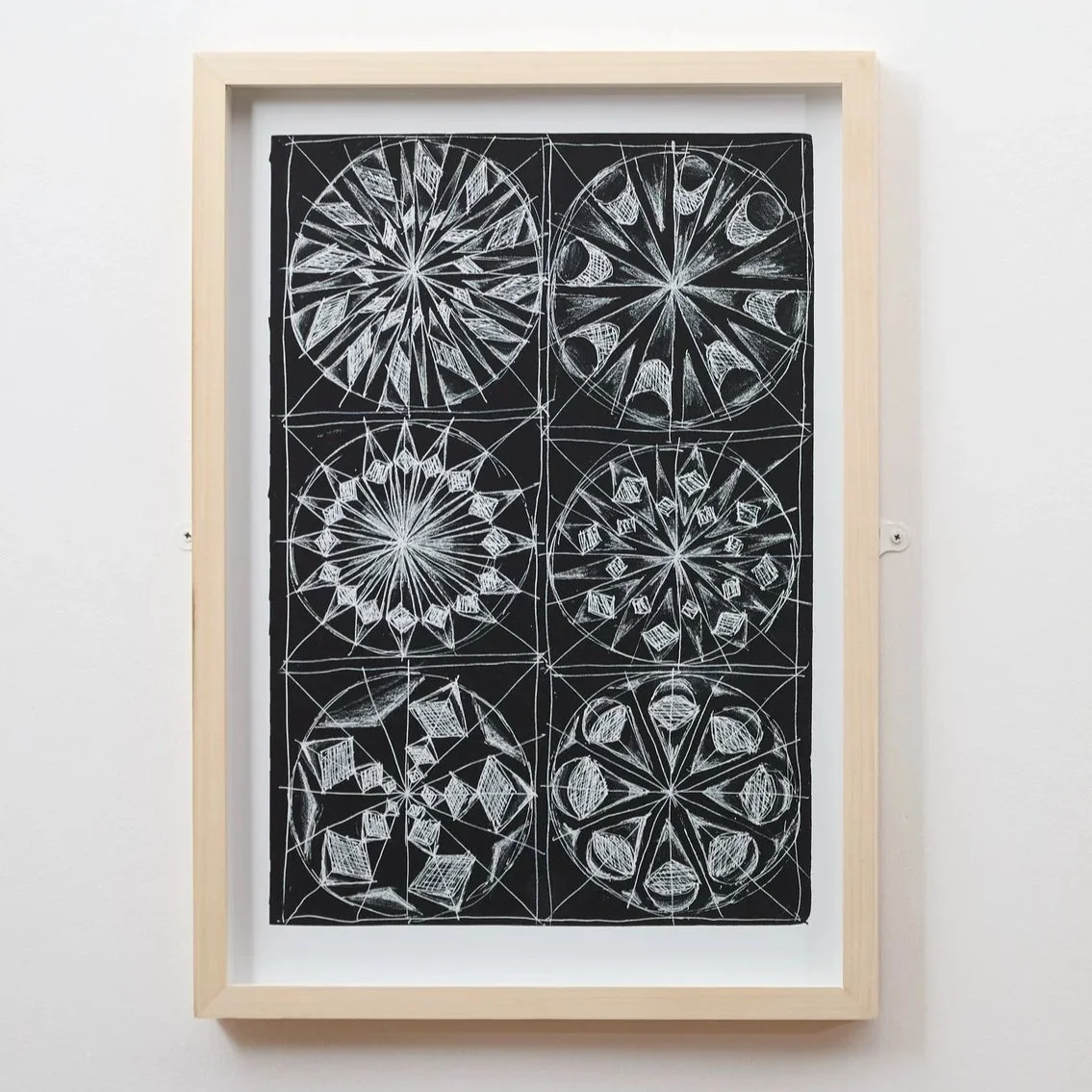
A2 limited‑edition print, part of a small run of just 25. Sold unframed.
..
Argraffiad cyfyngedig A2, rhan o rediad bach o 25. Yn cael ei werthu heb ffrâm.
….
….
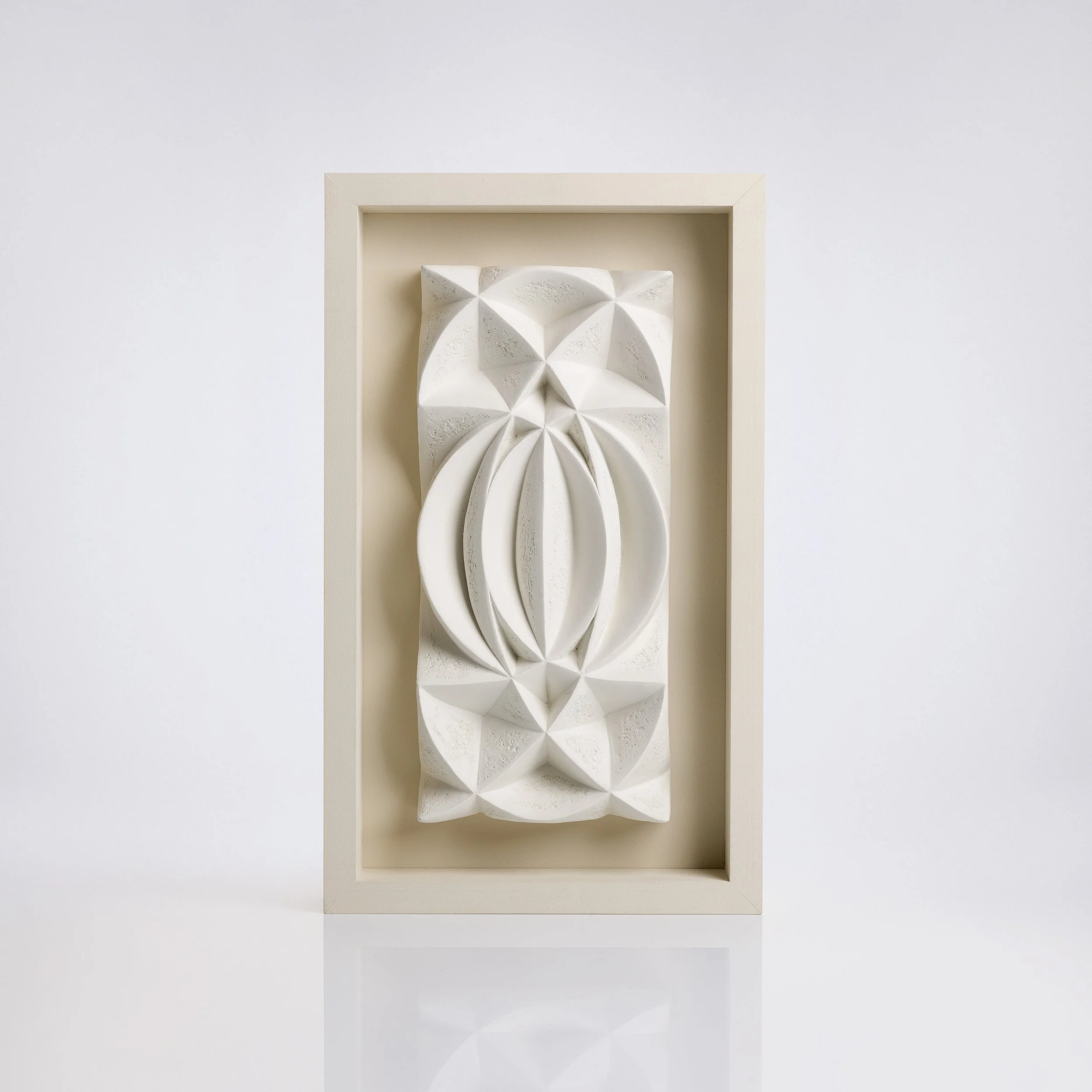
Beautiful hand-finished tile made from cast Jesmonite with bespoke colour mix presented in a white box frame, ready to hang.
Dimensions: frame 45.2 x 27 x 6.6cm; tile 17 x 35 x 3.5cm
..
Teilsen hardd wedi'i gorffen â llaw, wedi'i gwneud o Jesmonite wedi'i gastio gyda chymysgedd lliw pwrpasol, wedi'i chyflwyno mewn ffrâm flwch wen ac yn barod i'w hongian.
Dimensiynau: ffrâm 45.2 x 27 x 6.6cm; teilsen 17 x 35 x 3.5cm
….
….
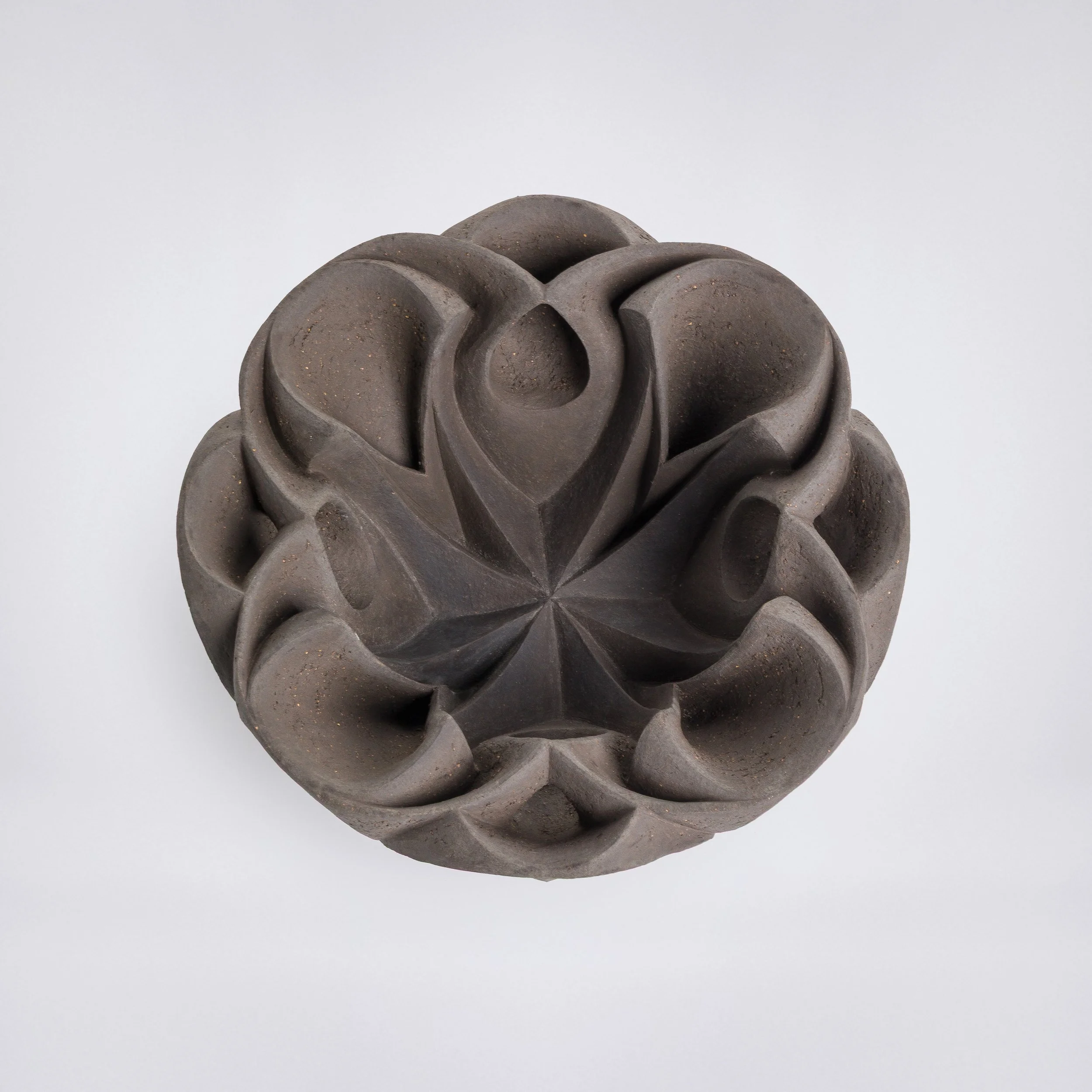
Hand carved, unglazed stoneware clay.
4.5” x 9"
Currently in exhibition, available for collection after the 20th September 2026.
..
Clai crochenwaith caled heb ei wydro wedi’i gerfio â llaw.
4.5” x 9"
Arddangosir ar hyn o bryd; ar gael i'w casglu ar ôl yr 20fed o Fedi 2026.
….
….
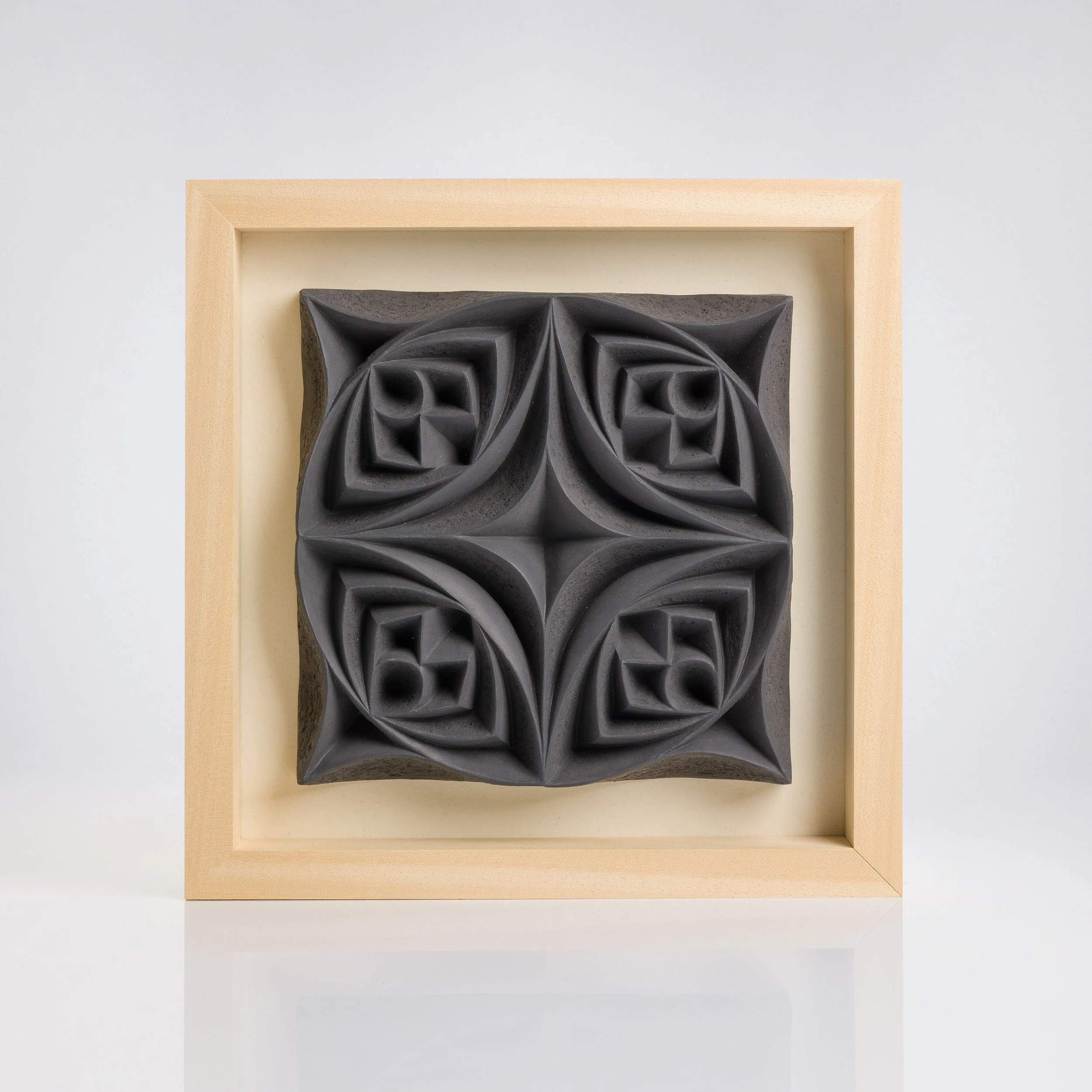
Jesmonite, with bronze and copper powder, each piece is hand cast, hand finished and hand polished.
30.5 × 30.5 x 4cm
..
Jesmonite gyda phowdr efydd a chopr; mae pob darn yn cael ei gastio, ei orffen a'i sgleinio â llaw.
30.5 × 30.5 x 4cm
….
….
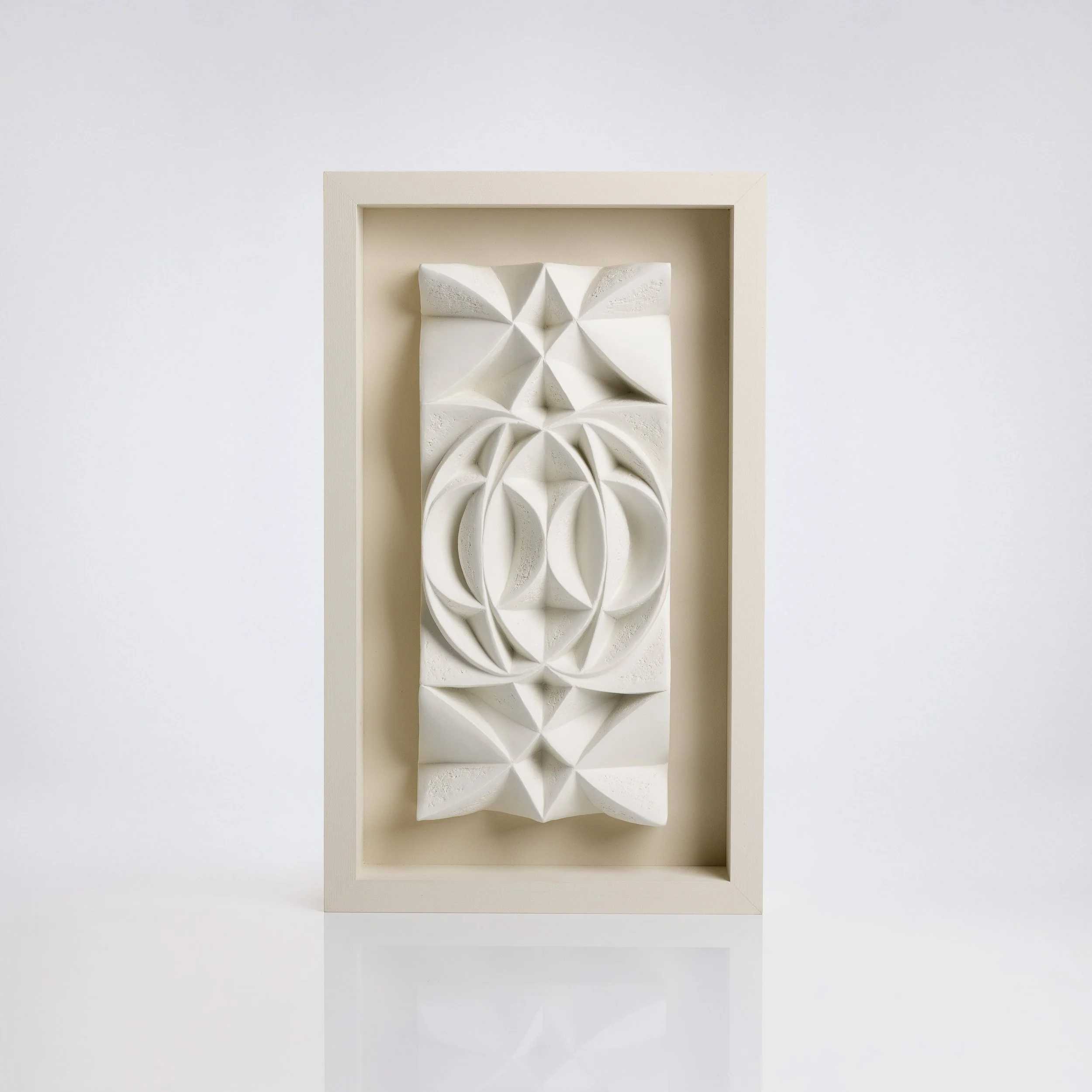
Beautiful hand-finished tile made from cast Jesmonite with bespoke colour mix presented in a white box frame, ready to hang.
Dimensions: frame 45.2 x 27 x 6.6cm; tile 17 x 35 x 3.5cm
..
Teilsen hardd wedi'i gorffen â llaw, wedi'i gwneud o Jesmonite wedi'i gastio gyda chymysgedd lliw pwrpasol, wedi'i chyflwyno mewn ffrâm flwch wen ac yn barod i'w hongian.
Dimensiynau: ffrâm 45.2 x 27 x 6.6cm; teilsen 17 x 35 x 3.5cm
….
….
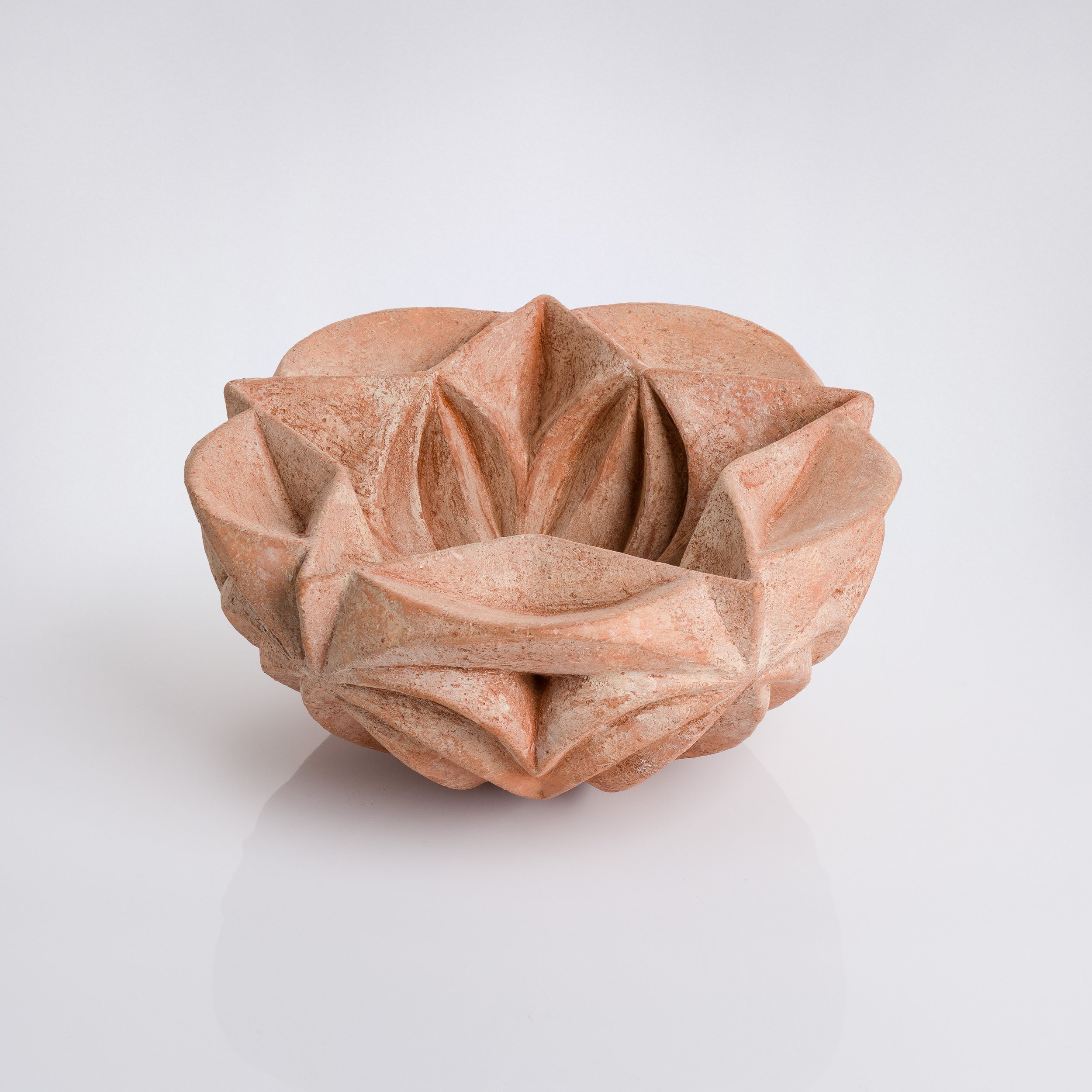
Hand carved, unglazed stoneware clay.
4.5” x 9"
Currently in exhibition, available for collection after the 20th September 2026.
..
Clai crochenwaith caled heb ei wydro wedi’i gerfio â llaw.
4.5” x 9"
Arddangosir ar hyn o bryd; ar gael i'w casglu ar ôl yr 20fed o Fedi 2026.
….